
Medical note: This article is for general education and does not diagnose a skin condition. If your baby is unwell, the rash is worsening, or you are unsure what is causing it, contact your paediatrician. A baby younger than 3 months with a temperature of 38°C (100.4°F) or higher needs urgent medical assessment.
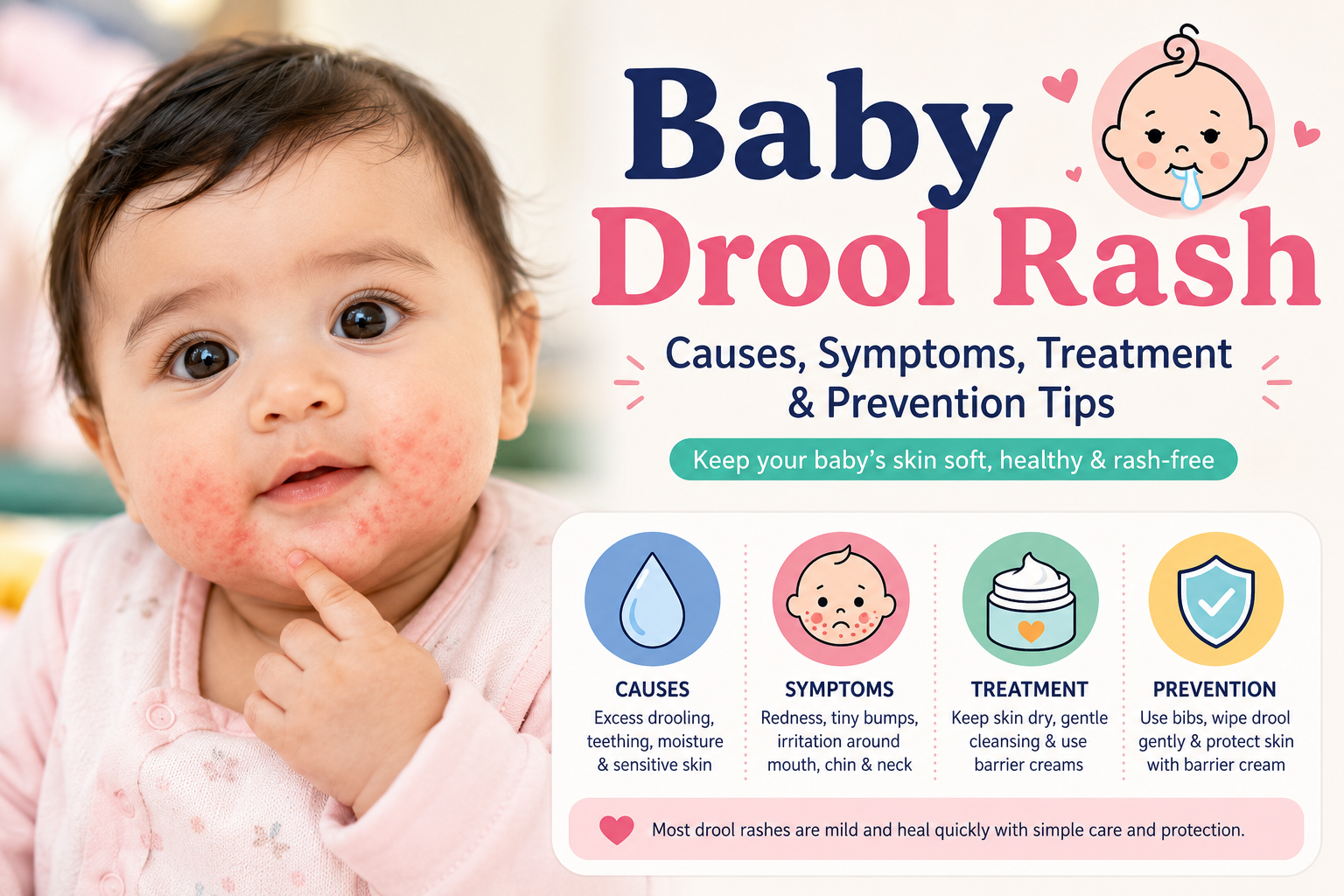
Baby drool rash is skin irritation caused when saliva repeatedly sits on a baby’s delicate skin. It commonly appears around the mouth, chin, cheeks or neck folds as red, dry or slightly bumpy patches. Gentle cleaning, careful drying and a simple fragrance-free barrier ointment can often help mild irritation settle.
Drooling can increase during teething, but babies may drool for other reasons too. Teething is not required for drool rash to develop. The key trigger is repeated moisture and friction on the skin.
What Is Baby Drool Rash?
Baby drool rash is usually a type of irritant contact dermatitis. Saliva, repeated wiping, damp clothing and skin rubbing together can disturb the skin’s protective barrier. It is not usually contagious.
It most often affects areas that stay wet, including:
- Around the lips and mouth
- Chin and lower cheeks
- Neck folds and the upper chest where drool collects
Rashes in these areas can have other causes, so location alone cannot confirm that a rash is from drooling.
What Does Baby Drool Rash Look Like?
It may look like pink or red patches, tiny bumps, dry or rough skin, mild scaling or chapped areas. The skin can become sore or cracked if irritation continues. Some babies are not bothered, while others may rub or fuss when the area is touched.
A rash that is very painful, rapidly spreading, blistered, crusted, weeping or associated with fever should not automatically be treated as simple drool rash.
What Causes Baby Drool Rash?
1. Saliva staying on the skin
Frequent drooling keeps the skin damp. Repeated wetting and drying can weaken the skin barrier and cause irritation.
2. Teething and normal development
Some babies drool more around the time teeth begin to emerge. However, drooling also occurs in babies who are not teething, so a rash does not prove that a tooth is coming.
3. Pacifiers, bibs and friction
A pacifier, damp bib, clothing or repeated wiping can rub against already irritated skin. Change wet bibs and clothing promptly and make sure pacifiers are clean.
4. Milk, food and skin folds
Milk, food and saliva can collect around the mouth or in neck folds. Residue and trapped moisture may add to irritation, particularly if the area is rubbed while cleaning.
Symptoms Parents Should Look For
- Redness around the mouth, chin or cheeks
- Small bumps or rough, dry patches
- Chapped or mildly flaky skin
- Redness in damp neck folds
- Cracks or soreness if the irritation becomes more severe
These signs are not specific to drool rash. If the rash persists, keeps returning, or looks different from mild irritation, ask a healthcare professional to assess it.
How to Treat Baby Drool Rash at Home
For mild irritation, focus on reducing moisture and friction and protecting the skin. Try these gentle steps:
1. Pat the skin dry
Use a soft, clean cloth to gently dab away saliva. Avoid scrubbing or repeatedly wiping the same area. After washing, pat the skin dry, including the neck folds.
2. Clean gently
Use lukewarm water and a soft cloth. If a cleanser is needed, choose a mild, fragrance-free product. Avoid fragranced wipes, alcohol-based products, harsh soaps and home remedies that may sting or irritate the skin.
3. Apply a simple barrier ointment
A thin layer of plain petroleum jelly may help protect irritated skin from saliva. Use a product suitable for your baby’s age and follow its label. Keep products out of the eyes and inside the mouth; do not apply thick layers where the baby may lick or swallow them. Ask your paediatrician or pharmacist before using medicated creams, antiseptics or steroid creams.
4. Change wet bibs and clothes
Replace damp bibs and clothing with clean, dry ones. Choose soft, absorbent fabrics and avoid tight or rough edges that rub the chin and neck.
5. Reduce friction from pacifiers
Keep pacifiers clean and gently dry the skin around them. If the pacifier appears to rub the same area repeatedly, discuss fit and use with your baby’s healthcare professional rather than applying creams inside the mouth.
How to Prevent Baby Drool Rash
- Keep a soft cloth nearby and gently dab away saliva when needed.
- Change wet bibs promptly; do not leave a damp bib against the skin.
- Clean and dry neck folds carefully, without rubbing.
- Use a thin layer of a suitable barrier ointment if your baby’s skin is repeatedly exposed to drool.
- Wash pacifiers and teething toys according to the manufacturer’s instructions.
- Avoid fragranced skincare products and unnecessary creams on irritated skin.
Baby Drool Rash vs Eczema vs Heat Rash
These conditions can look similar, and a clinician may need to examine the skin to tell them apart.
| Condition | Common clues | Important note |
|---|---|---|
| Drool rash | Irritation where saliva repeatedly touches the skin, often around the mouth or chin | May improve when moisture and friction are reduced |
| Eczema | Dry, itchy, inflamed patches that may occur on the cheeks or other parts of the body | Often needs ongoing skin care; treatment depends on severity |
| Heat rash | Small bumps in hot, sweaty or covered areas such as the neck, chest or back | Cooling and reducing overheating may help |
Do not rely on this comparison to diagnose your baby’s rash. Seek advice if it is persistent, spreading or uncomfortable.
Can Teething Cause Drool Rash?
Teething may coincide with increased drooling, and saliva left on the skin can contribute to drool rash. But drooling can happen without teething. A rash alone is not a reliable sign that a tooth is about to appear.
Can Breast Milk Help Baby Drool Rash?
There is not enough reliable evidence to recommend breast milk as a treatment for drool rash. Gentle cleaning, patting the skin dry and protecting it from further saliva exposure are more practical first steps. If the rash does not improve, ask your paediatrician rather than trying multiple home remedies.
Is Baby Drool Rash Contagious?
No. Irritant drool rash itself is not contagious because it is caused by moisture and friction, not by a germ. However, another rash or a secondary infection can look similar, so seek medical advice if you notice pus, spreading redness, blisters or crusting.
When Should You See a Paediatrician?
Contact your baby’s healthcare professional if the rash is worsening, does not start improving after a few days of gentle care, keeps returning, becomes painful, cracks or bleeds, or you are unsure what is causing it. Seek prompt medical advice for blisters, pus, yellow crusting, warmth, swelling, rapidly spreading redness or fever.
Get urgent medical assessment if your baby seems very unwell, is unusually sleepy or difficult to wake, has trouble breathing, or is younger than 3 months and has a temperature of 38°C (100.4°F) or higher. Follow local emergency guidance if symptoms are severe.
Frequently Asked Questions
What causes baby drool rash?
It is usually caused by repeated contact with saliva, combined with moisture and friction that irritate the skin barrier. Bibs, pacifiers and frequent wiping can add to the irritation.
At what age do babies get drool rash?
It can happen whenever a baby drools enough for saliva to remain on the skin. It is common during infancy, but there is no single age when it must begin.
Is baby drool rash painful?
Mild irritation may not bother a baby. If the skin becomes cracked or inflamed, it can feel sore. Seek advice if your baby seems very uncomfortable.
How long does baby drool rash last?
Mild irritation may begin to settle after moisture and friction are reduced, but the time varies. If it is not improving after a few days, is worsening or keeps returning, contact your paediatrician.
Can drool rash spread?
It is not contagious. Irritation can appear on nearby skin if saliva continues to contact those areas.
Can I use petroleum jelly for drool rash?
A thin layer of plain petroleum jelly can act as a protective barrier for some babies. Use it externally, keep it away from the eyes and inside the mouth, and follow the product label. Ask a clinician if you are unsure.
Does breast milk cure drool rash?
There is not enough reliable evidence to say that breast milk cures drool rash. Gentle skin care and reducing saliva exposure are more established first steps.
Can babies get drool rash without teething?
Yes. Babies can drool for reasons other than teething, and saliva can irritate the skin whenever it remains wet for long periods.
Should I stop using a pacifier if my baby has drool rash?
Not necessarily. Keep it clean, check that it is not rubbing the skin and change damp bibs. Ask your paediatrician if the rash seems linked to pacifier use or does not improve.
Is drool rash a fungal infection?
Typical drool rash is irritation from saliva, not a fungal infection. Some infections can affect skin folds and may look similar, so get the rash checked if it is persistent, worsening or has unusual features.
What is the fastest way to help drool rash heal?
Gently pat the area dry, reduce friction, change wet bibs and use a suitable thin barrier layer. Avoid harsh products and seek medical advice if the rash is not improving.
Can drool rash appear on the neck?
Yes. Saliva can collect in neck folds, where moisture and friction may irritate the skin. Clean and dry the folds gently.
Can drool rash bleed?
Severely irritated or cracked skin may bleed. If you notice bleeding, significant pain or signs of infection, contact your baby’s healthcare professional.
When should I worry about baby drool rash?
Seek medical advice if the rash spreads quickly, becomes painful, blisters, oozes, develops yellow crusts, is accompanied by fever or your baby seems unwell. A baby younger than 3 months with a temperature of 38°C (100.4°F) or higher needs urgent assessment.
Trusted further reading: American Academy of Pediatrics – HealthyChildren and NHS – Rashes in babies and children.