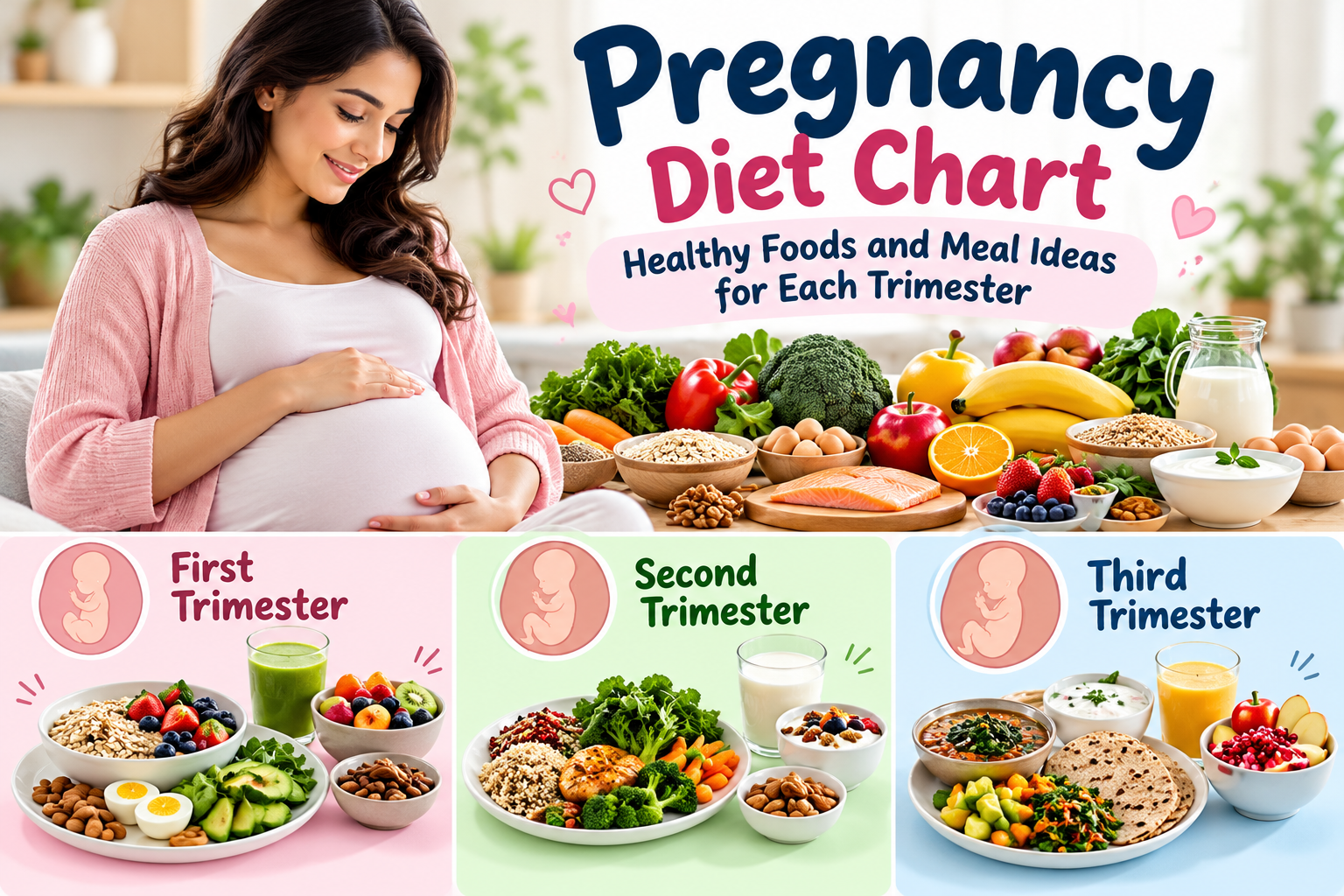
A balanced diet during pregnancy helps meet changing nutritional needs, but there is no single meal plan that suits everyone. For related information, read our pregnancy weight gain chart. Appetite, nausea, food preferences, medical conditions, culture and access to food all matter. Use this pregnancy diet chart as a flexible example—not a prescription—and discuss your individual needs with your obstetrician or registered dietitian.
What should a healthy pregnancy diet include?
A varied eating pattern can include vegetables and fruits, whole grains, pulses and beans, nuts and seeds, pasteurised dairy or suitable alternatives, and well-cooked protein foods. Include different colours and food groups across the week rather than relying on one “superfood”.
Key nutrients during pregnancy
- Folate: Important in early fetal development. Take folic acid as advised before conception and in early pregnancy; food sources include leafy greens, beans and fortified foods.
- Iron: Supports increased blood needs. Sources include pulses, beans, meat, leafy greens and iron-fortified foods. Your clinician may prescribe an iron supplement based on local guidance and blood tests.
- Calcium: Supports bones and teeth. Sources include milk, curd, cheese, calcium-set tofu and suitable fortified alternatives.
- Protein: Needed for growth and tissue repair. Include dals, beans, lentils, eggs, dairy, tofu, fish or well-cooked meat according to your diet.
- Iodine and vitamin B12: Needs can vary with diet and local fortification. Discuss supplements with your clinician, especially if you follow a vegetarian or vegan diet.
- Omega-3 fats: Low-mercury fish can be a source; vegetarian sources include walnuts, chia and flaxseed. Ask about an appropriate supplement if needed.
Sample pregnancy diet chart: one flexible day
| Meal | Example options |
|---|---|
| On waking | Water; a small snack such as plain toast or a few nuts if it helps with nausea |
| Breakfast | Vegetable poha or oats with milk/fortified alternative; add a protein source such as curd or well-cooked egg |
| Mid-morning | One washed fruit, such as orange, guava, apple or banana |
| Lunch | Roti or rice, dal/beans, cooked vegetables, curd or a suitable alternative |
| Evening snack | Roasted chana, nuts, or a vegetable sandwich |
| Dinner | Roti or rice with cooked vegetables and paneer, tofu, dal, egg, fish or meat cooked thoroughly |
| If hungry later | Milk or a small snack that suits your appetite |
Adjust portions to appetite and your clinician’s advice. You do not need to “eat for two”. Food requirements change over pregnancy, but quality, variety and adequate intake matter more than forcing extra portions.
Food ideas by trimester
First trimester
If nausea makes large meals difficult, try small, frequent meals and foods you tolerate. Keep fluids available and choose simple foods when needed. Seek medical advice if vomiting prevents you from keeping fluids down, you pass very little urine or you feel faint.
Second trimester
As appetite changes, aim for regular balanced meals with protein, vegetables, fruit and whole grains. Include iron- and calcium-containing foods and take supplements only as recommended.
Third trimester
Smaller meals may feel more comfortable if you experience heartburn or fullness. Continue varied meals and adequate fluids. If you have gestational diabetes, anaemia, high blood pressure or another condition, follow your personalised plan.
Foods and drinks to handle carefully
- Avoid alcohol during pregnancy.
- Limit caffeine according to your maternity clinician’s advice; many guidelines advise no more than 200 mg per day.
- Avoid raw or undercooked meat, fish, eggs and seafood; cook foods thoroughly.
- Choose pasteurised milk and dairy products; avoid unpasteurised products.
- Wash fruits and vegetables carefully and prevent cross-contamination between raw and cooked foods.
- Choose fish known to be low in mercury and avoid high-mercury species according to local public-health advice.
- Do not start herbal products, high-dose vitamins or supplements without checking with your clinician.
Vegetarian pregnancy diet tips
Vegetarian meals can be balanced with dals, beans, chickpeas, soy foods, paneer, curd, nuts, seeds and whole grains. If you avoid all animal products, discuss vitamin B12, iron, iodine, calcium, vitamin D and omega-3 intake with a qualified dietitian or clinician.
When you need an individual meal plan
Ask your maternity team for personalised advice if you have gestational diabetes, thyroid disease, anaemia, food allergies, significant nausea or vomiting, a multiple pregnancy, a history of bariatric surgery, or dietary restrictions. Do not use a general chart to change prescribed medication or supplements.
Frequently asked questions
Should I eat for two during pregnancy?
No. Energy needs vary by trimester and individual circumstances. Focus on a varied, nutrient-rich diet and follow your clinician’s guidance on weight gain.
Can I eat papaya or pineapple during pregnancy?
Normal portions of ripe fruit are generally part of a varied diet. Avoid unripe or improperly handled foods and ask your clinician about any specific food concern or medical restriction.
Is a vegetarian diet safe during pregnancy?
A well-planned vegetarian diet can meet pregnancy needs, but some nutrients require attention. Discuss your food pattern and supplements with a qualified professional.
Final thoughts
A useful pregnancy diet chart is balanced, varied and realistic for your routine. Choose foods you enjoy, practise food safety, take only recommended supplements and get a personalised plan if you have a medical condition or nutritional concern.
Medical note: This is general nutrition education, not individual medical or dietetic advice. Nutrient and supplement needs should be assessed by your maternity care team.