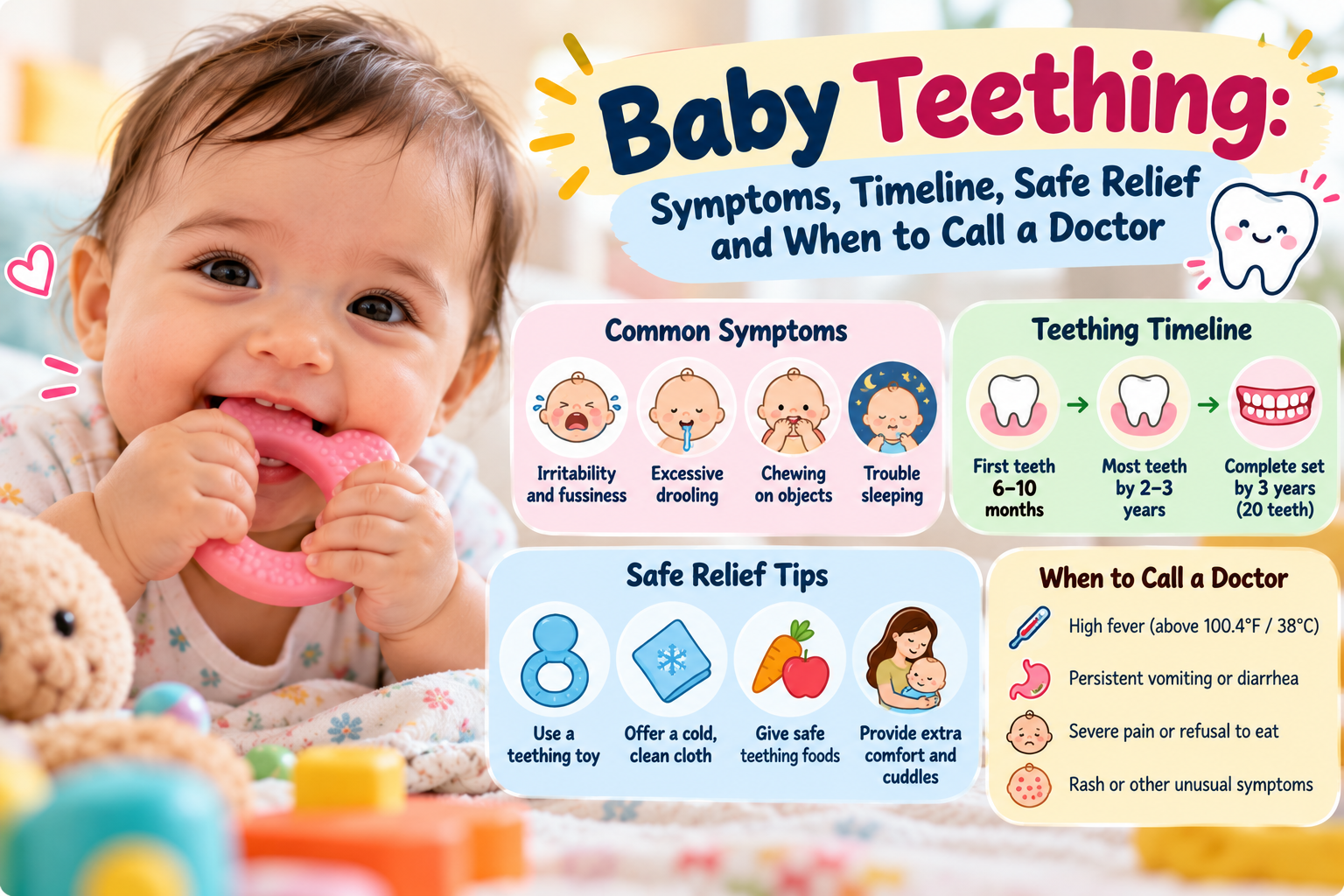
Baby Teething: Symptoms, Timeline, Safe Relief and When to Call a Doctor

Quick answer: Most babies begin teething at around 6 months, although the first tooth may appear earlier or later. Common signs include sore or swollen gums, extra drooling, chewing on objects and temporary fussiness. A clean, cool teething ring or gentle gum massage may help. Teething should not be used to explain a high fever, persistent diarrhoea, vomiting or a baby who seems seriously unwell.
Reviewed for clinical accuracy before publication by a qualified paediatric dentist or paediatrician.
What is baby teething?
Teething is the process in which a baby’s primary (milk) teeth move through the gums and become visible. It is a normal part of development. The first tooth often appears around 6 months, but there is a wide range of normal timing. Some babies show very few signs, while others have a few uncomfortable days around a tooth’s eruption.
Teething happens gradually. Symptoms may come and go as different teeth emerge, with comfortable gaps in between. The full set of 20 primary teeth usually appears by about 2½ to 3 years.
When do babies start teething? A typical timeline
Many babies get their first tooth between 6 and 10 months. The lower front teeth commonly appear first, followed by the upper front teeth. The age ranges below are approximate; a healthy baby’s teeth may arrive earlier, later or in a slightly different order.
| Teeth | Typical age range |
|---|---|
| Lower central incisors (bottom front teeth) | 6–10 months |
| Upper central incisors (top front teeth) | 8–12 months |
| Upper lateral incisors | 9–13 months |
| Lower lateral incisors | 10–16 months |
| First molars | 13–19 months |
| Canines | 16–23 months |
| Second molars | 23–33 months |
These ranges are a guide, not a test your baby must pass. For a tooth-by-tooth chart and eruption order, see MomSaathi’s Baby Teeth Order: Eruption Chart and Timeline.
Common baby teething symptoms
Signs that may occur around teething include:
- More drooling: Your baby may drool more than usual. Frequent, gentle wiping can help prevent irritation around the mouth and chin.
- Chewing or biting: Babies may gnaw on their fingers, toys or a safe teething ring because pressure can feel soothing.
- Tender or swollen gums: The gum around an emerging tooth may look slightly red or swollen.
- Temporary fussiness: Some babies become unsettled or want extra cuddles.
- Changes in sleep: Gum discomfort may briefly disturb sleep, although waking has many possible causes.
- Short-term changes in feeding: A sore mouth may make some babies less interested in solids or temporarily fussier during feeds.
Not every symptom means a tooth is coming. Drooling, hand-chewing and night waking are also common in babies who are not teething. Look at the whole picture rather than relying on one sign.
What is not usually caused by teething?
Teething does not explain a baby who is significantly unwell. A high temperature, persistent diarrhoea, repeated vomiting, widespread rash, marked lethargy or difficulty breathing should not be dismissed as teething. These symptoms may have another cause and need appropriate medical assessment.
If your baby is under 3 months and has a temperature of 38°C (100.4°F) or higher, seek urgent medical advice. For babies of any age, seek prompt care if they are difficult to wake, struggling to breathe, showing signs of dehydration, having a seizure or appear seriously unwell. Follow local emergency guidance.
Safe ways to soothe teething discomfort
1. Offer a cool teething ring
Choose a firm, age-appropriate teething ring from a reputable manufacturer. Cool it in the refrigerator if the product instructions allow. Do not freeze it: an extremely cold or hard object can injure sensitive gums. Check it before each use and discard it if cracked, damaged or leaking.
2. Try a clean, cool washcloth
Dampen a clean, soft washcloth with cool water and let your baby chew it while you supervise closely. Keep the cloth clean and remove it if it starts to fray or your baby can pull pieces loose.
3. Massage the gums gently
Wash your hands and use a clean finger to gently rub the sore gum for a short time. Stop if your baby resists or becomes more uncomfortable. Do not press hard or try to help a tooth break through.
4. Give comfort and keep normal routines
Extra cuddles, calm play and a familiar bedtime routine can help your baby settle. If sleep is disrupted, respond to your baby’s needs while keeping safe-sleep practices in place.
5. Keep feeding and hydration on track
Continue breast milk or formula as usual. If your baby has started solids, offer suitable foods with their usual texture and temperature, and never force a feed. For babies eating solids, ask your healthcare professional about age-appropriate options if chewing is uncomfortable. Avoid hard raw foods and anything that could break into a choking hazard.
6. Protect irritated skin from drool
Pat the chin and cheeks dry with a soft cloth rather than rubbing. If the skin becomes irritated, ask a pharmacist or clinician about a simple fragrance-free barrier product suitable for your baby’s age and skin.
Teething remedies and products to avoid
- Amber or other teething necklaces and bracelets: Do not use them. They can cause choking or strangulation and have no proven teething benefit.
- Teething gels or liquids containing benzocaine or lidocaine: Do not use these for babies unless specifically directed by a qualified clinician; numbing products can cause serious side effects.
- Homeopathic teething tablets or unverified herbal products: Avoid them. Products marketed as natural are not automatically safe or effective for infants.
- Alcohol, clove oil or other essential oils on the gums: Do not apply them. They may irritate or harm the mouth and can be unsafe if swallowed.
- Frozen-hard foods, ice cubes or hard objects: These can injure gums or create a choking risk.
- Unsupervised food feeders or teething toys with loose parts: Stay with your baby during use and inspect products regularly.
If your baby seems to be in significant pain, ask your paediatrician about whether a pain-relieving medicine is appropriate. The correct medicine and dose depend on the child’s age, weight and health. Do not guess a dose or use adult medicines.
When should you call a doctor or dentist?
Contact your paediatrician if your baby has a fever, persistent diarrhoea or vomiting, poor feeding, fewer wet nappies, unusual sleepiness, prolonged inconsolable crying, or symptoms that are worsening rather than settling. Seek urgent care for breathing difficulty, a seizure, severe dehydration or a baby who is difficult to wake.
Arrange dental advice if you notice pus, significant gum swelling, bleeding without an obvious cause, a damaged or discoloured tooth, or any concern about your baby’s mouth. If no tooth has appeared by around 18 months, discuss it with a paediatric dentist or paediatrician; it does not automatically mean something is wrong, but an assessment can be helpful.
How to care for your baby’s first teeth
Start brushing as soon as the first tooth appears. Use a small, soft-bristled baby toothbrush and a tiny smear (about the size of a grain of rice) of fluoride toothpaste, following your local dental professional’s advice. An adult should do the brushing twice a day, including before bedtime. Keep toothpaste out of your baby’s reach.
Plan your child’s first dental visit by their first birthday or within six months of the first tooth appearing, whichever comes first. Early visits help parents get advice on brushing, fluoride, feeding and preventing early childhood tooth decay. Read MomSaathi’s Dental Care for Kids in India guide for more on building an oral-care routine.
Frequently asked questions about baby teething
At what age do babies usually start teething?
Many babies get their first tooth at around 6 months, often within a broad range of about 4–10 months. Some healthy babies start earlier or later.
What are the first signs of teething?
Common signs include sore or swollen gums, extra drooling, chewing on safe objects and temporary fussiness. These signs are not proof of teething on their own.
Can teething cause fever or diarrhoea?
Teething should not be used to explain a true fever or diarrhoea. If your baby has a temperature, persistent loose stools or seems unwell, contact a healthcare professional.
How long does teething pain last?
There is no exact duration. Discomfort may occur for a few days around the time a tooth emerges, then settle before the next tooth starts coming through.
Are frozen teething rings safe?
No. Do not freeze teething rings. Use a suitable ring cooled in the refrigerator only if the manufacturer’s instructions permit it.
Are teething necklaces safe for babies?
No. Amber and other teething necklaces or bracelets pose choking and strangulation risks and should not be used.
When should I start brushing my baby’s teeth?
Start as soon as the first tooth appears. Brush twice daily with a soft baby toothbrush and a rice-grain-sized smear of fluoride toothpaste, following your dentist’s advice.
When should my baby first see a dentist?
Arrange the first dental visit by the first birthday or within six months after the first tooth appears, whichever comes first.
Final thoughts
Teething is a normal milestone, but every baby experiences it differently. Offer safe cooling and comfort, keep feeding and sleep routines as steady as possible, and begin brushing as soon as the first tooth appears. Most importantly, do not assume that fever, diarrhoea or significant illness is caused by teething. When something does not seem right, contact your baby’s healthcare professional.
Medical disclaimer: This article is for general education and does not replace medical or dental advice, diagnosis or treatment. Consult your paediatrician or paediatric dentist for advice about your child’s symptoms, medicines or individual care.