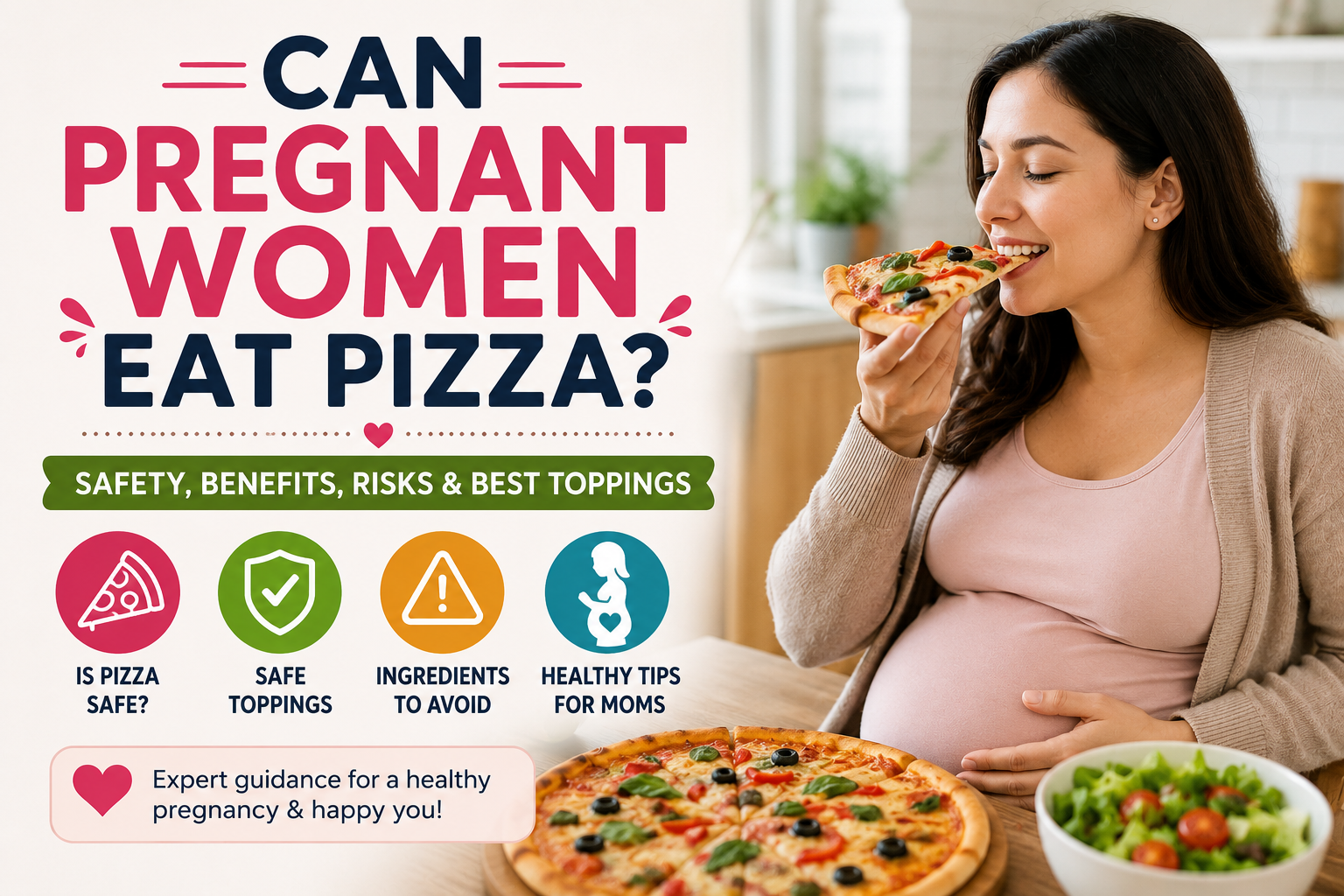
Yes, most pregnant women can eat pizza if it is freshly prepared, cooked thoroughly, served hot and made with pasteurised cheese and fully cooked toppings. The main pregnancy food-safety concerns are unpasteurised dairy, undercooked meat or seafood, poor food handling and leftovers that have not been stored or reheated safely.
Pizza does not need to be completely avoided during pregnancy. The important thing is to check the ingredients and preparation, choose a sensible portion and consider any pregnancy-related dietary advice from your doctor.
Quick answer: A freshly baked pizza with pasteurised mozzarella or other pasteurised cheese, thoroughly cooked vegetables and fully cooked chicken or paneer is generally a suitable choice during pregnancy. Avoid unpasteurised cheese and raw or undercooked toppings. Eat leftovers only if they were refrigerated promptly and reheated until steaming hot throughout.
This guide explains how to choose pizza safely in the first, second and third trimesters, which toppings to check, and how to make a more balanced choice in India.
Is Pizza Safe During Pregnancy?
For most people with an uncomplicated pregnancy, pizza can be eaten safely when it is prepared and stored properly. The risk is not the pizza base itself; it is more often linked to an ingredient or to how food has been handled.
- Cheese: Choose cheese made with pasteurised milk. Check the label or ask the restaurant if you are unsure.
- Meat: Chicken, sausage, pepperoni, salami and other meat toppings should be cooked thoroughly. Reheat deli-style or cured meats until steaming hot before eating.
- Seafood: Choose fully cooked, lower-mercury seafood and avoid raw seafood.
- Vegetables: Use vegetables that have been washed properly and cooked or handled hygienically.
- Storage: Do not eat pizza that has been left at room temperature for too long. Refrigerate leftovers promptly.
When ordering, choose a restaurant that handles food hygienically and serves the pizza freshly cooked. If the staff cannot confirm whether the cheese is pasteurised or whether a topping is fully cooked, choose a simpler option.
Which Pizza Cheeses Can You Eat During Pregnancy?
Pasteurisation reduces the risk of harmful bacteria such as Listeria in milk and dairy products. During pregnancy, choose cheese made from pasteurised milk and follow safe storage instructions.
- Mozzarella: Generally suitable when made with pasteurised milk.
- Cheddar and processed cheese: Usually suitable when made with pasteurised milk.
- Paneer: Choose fresh paneer made from pasteurised milk, keep it refrigerated and cook it thoroughly.
- Parmesan: Hard cheeses are generally lower risk, but check the product label and use a reputable source.
Do not assume that every cheese is safe simply because it is melted on a pizza. Ask whether it is made from pasteurised milk. Avoid unpasteurised dairy products. If a soft cheese is made with unpasteurised milk, do not rely on the pizza being warm on top; it needs to be cooked thoroughly until steaming hot throughout, and choosing a pasteurised alternative is the simpler option.
Which Pizza Toppings Are Safe During Pregnancy?
Vegetable toppings
Bell peppers, onions, tomatoes, spinach, mushrooms, sweet corn and olives can add fibre and micronutrients. Vegetables should be washed thoroughly before preparation and handled safely. Cooked toppings are a practical choice when ordering from outside.
Chicken and paneer
Chicken should be fully cooked with no raw or pink centre. Paneer should be fresh, made with pasteurised milk and cooked thoroughly. Both can contribute protein to a meal.
Egg toppings
Eggs should be cooked until both the white and yolk are firm. Avoid runny or partly cooked egg toppings.
Pepperoni, salami, ham and sausage
These are processed or cured meat toppings. During pregnancy, deli meats and cold cured meats can carry a Listeria risk. If you choose them, they should be heated until steaming hot throughout. Limit processed meats because they can also be high in sodium.
Seafood toppings
Raw or undercooked seafood should be avoided. If you choose a seafood pizza, make sure the seafood is thoroughly cooked and select a lower-mercury option. Avoid high-mercury fish during pregnancy; check current advice from your healthcare provider or a trusted food-safety authority if you are unsure about a particular fish.
Pizza Ingredients to Avoid or Check Carefully
- Cheese or paneer made from unpasteurised milk.
- Raw or undercooked chicken, meat, eggs or seafood.
- Cold deli meat or cured meat that has not been reheated until steaming hot.
- Raw seafood toppings.
- Unwashed salad or vegetable toppings and food from outlets with questionable hygiene.
- Pizza that has been left unrefrigerated for an extended period.
Food-safety advice can vary by product and preparation. If you have been advised to follow additional precautions because of your health or pregnancy, follow your obstetrician’s guidance.
Can You Eat Pizza in the First, Second or Third Trimester?
There is no general rule that pizza must be avoided in one particular trimester. The same food-safety principles apply throughout pregnancy: pasteurised dairy, thoroughly cooked toppings, hygienic preparation and safe storage.
- First trimester: If nausea or food aversions are troubling you, a small, plain slice may be easier to tolerate than a very oily or spicy pizza. Choose safe ingredients.
- Second trimester: Pizza can be an occasional meal. Add vegetables and a protein topping, and keep the portion appropriate to your appetite and nutritional needs.
- Third trimester: Heartburn and feeling full quickly can be more common. A smaller portion with less oil, chilli and cheese may feel more comfortable.
If you have gestational diabetes, high blood pressure, a food allergy or another medical condition, ask your doctor or dietitian how pizza can fit into your individual meal plan.
Is Pizza Healthy During Pregnancy?
Pizza can provide carbohydrates, protein and calcium, depending on its ingredients. However, some restaurant and takeaway pizzas are high in sodium, saturated fat and calories, particularly when they contain extra cheese, processed meat or creamy sauces. Pizza is not a complete pregnancy diet by itself.
To make a more balanced meal:
- Choose a regular or thin crust if you prefer it; a whole-wheat base can add fibre when available.
- Add a variety of vegetables.
- Choose thoroughly cooked chicken or fresh paneer for protein.
- Use a moderate amount of pasteurised cheese.
- Limit extra processed meat, very salty toppings and heavy creamy sauces.
- Pair your slice with washed vegetables, salad prepared hygienically or a piece of fruit.
You do not need to follow a special “pregnancy pizza” diet. Aim for variety across the day and week, including vegetables, fruit, pulses, whole grains, dairy or suitable alternatives, and protein-rich foods.
Homemade Pizza vs Restaurant Pizza During Pregnancy
| Homemade pizza | Restaurant or takeaway pizza |
|---|---|
| You can check the milk source and choose pasteurised cheese. | Ask the restaurant whether the cheese is pasteurised. |
| You can wash vegetables and control food preparation. | Choose an outlet with good hygiene and freshly cooked food. |
| You can control salt, cheese, oil and portion size. | Consider a smaller size and request fewer processed-meat toppings. |
| Cook meat, eggs and seafood thoroughly. | Ask for meat and seafood toppings to be fully cooked. |
Neither option is automatically safe or unsafe. Safe ingredients, thorough cooking and good food handling matter most.
Can Pregnant Women Eat Frozen Pizza?
Yes, frozen pizza can generally be eaten during pregnancy if it has been stored according to the package instructions and cooked completely as directed. Do not eat it partially cooked or while the centre is still cold. Check that meat toppings are thoroughly cooked and that the cheese is made from pasteurised milk. Do not use a product past its use-by date or one that has been stored incorrectly.
Can You Eat Leftover Pizza During Pregnancy?
Leftover pizza can be eaten if it was handled safely:
- Refrigerate leftovers within two hours of cooking or delivery; refrigerate sooner in very hot conditions.
- Store them in a covered container in a refrigerator at a safe temperature.
- Eat refrigerated leftovers within three to four days, or sooner if the product guidance says so.
- Reheat only the portion you plan to eat until steaming hot throughout. A food thermometer should read 74°C (165°F) when checking reheated leftovers.
- Discard pizza that has been left at room temperature for more than two hours, or for more than one hour when the temperature is above 32°C.
Reheating does not make food safe if it has been stored unsafely for too long. When in doubt, throw it out.
What If You Have Gestational Diabetes or Heartburn?
Gestational diabetes
Pizza contains carbohydrates from the crust, and the amount can vary by size and recipe. If you have gestational diabetes, follow your prescribed meal plan. You may need to choose a smaller portion, account for the carbohydrate content and pair it with vegetables and protein. Check your blood glucose as advised by your care team rather than relying on a general serving-size rule.
Heartburn or acidity
Large, greasy, spicy or extra-cheesy meals may worsen heartburn for some pregnant people. Try a smaller portion, eat slowly and avoid lying down immediately after eating. Seek medical advice if symptoms are severe or persistent.
Common Myths About Eating Pizza During Pregnancy
Myth 1: Pregnant women must avoid all pizza.
Fact: Most pizza can be eaten when it is made with safe ingredients, cooked thoroughly and stored correctly.
Myth 2: Melted cheese is always safe.
Fact: Check whether the cheese is made from pasteurised milk. Food should be cooked thoroughly, but melting alone is not a reliable way to judge safety.
Myth 3: Vegetable pizza is automatically safe.
Fact: Vegetable toppings should be washed and handled hygienically. Cheese, sauces and food storage still matter.
Myth 4: Eating pizza occasionally causes pregnancy complications.
Fact: There is no reason to assume that an occasional safely prepared pizza causes pregnancy complications. Overall dietary pattern and individual health needs matter more.
Frequently Asked Questions
Can pregnant women eat pizza from Domino’s or Pizza Hut?
Usually, yes, if the pizza is freshly cooked, served hot, made with pasteurised cheese and has fully cooked toppings. Restaurant recipes and suppliers can vary, so check with the outlet if you are unsure about an ingredient.
Can I eat mozzarella pizza during pregnancy?
Yes, mozzarella made from pasteurised milk is generally suitable during pregnancy. Check the label or ask the restaurant.
Can I eat cheese burst pizza while pregnant?
It can be eaten if the cheese is pasteurised and the pizza is cooked and served hot. Cheese-burst varieties can be high in fat and calories, so consider your portion and any advice related to gestational diabetes or other conditions.
Can pregnant women eat mushroom pizza?
Yes, provided the mushrooms are fresh, properly handled and cooked thoroughly, and the cheese is pasteurised.
Can I eat pizza in the first month of pregnancy?
There is no special first-month restriction on pizza. Follow the same food-safety precautions throughout pregnancy.
Can I eat cold leftover pizza during pregnancy?
It is safer to reheat refrigerated leftover pizza until steaming hot throughout. Do not eat pizza that has been left out too long or stored incorrectly.
How often can I eat pizza during pregnancy?
There is no single frequency that suits everyone. Enjoy it occasionally as part of a varied diet, and follow your clinician’s advice if you have a condition that affects your food choices.
References and Further Reading
- CDC – Preventing Listeria infection during pregnancy
- FoodSafety.gov – Food safety for pregnant women
- US FDA – Advice about eating fish
- NHS – Foods to avoid in pregnancy
- ACOG – Nutrition during pregnancy
Final Takeaway
Can pregnant women eat pizza? Yes, in most pregnancies. Choose freshly cooked pizza with pasteurised cheese, fully cooked meat or seafood and hygienically prepared vegetables. Store and reheat leftovers safely, and keep portions in line with your appetite and medical needs. If you have gestational diabetes, high blood pressure, allergies or specific dietary restrictions, ask your obstetrician or dietitian for personalised advice.
Medical disclaimer: This article provides general educational information and is not a substitute for personalised medical advice. Contact your healthcare professional if you are unsure whether a food is suitable for your pregnancy.